/logo.png)


- By Admin
- 11 August, 2025
- 5 min read
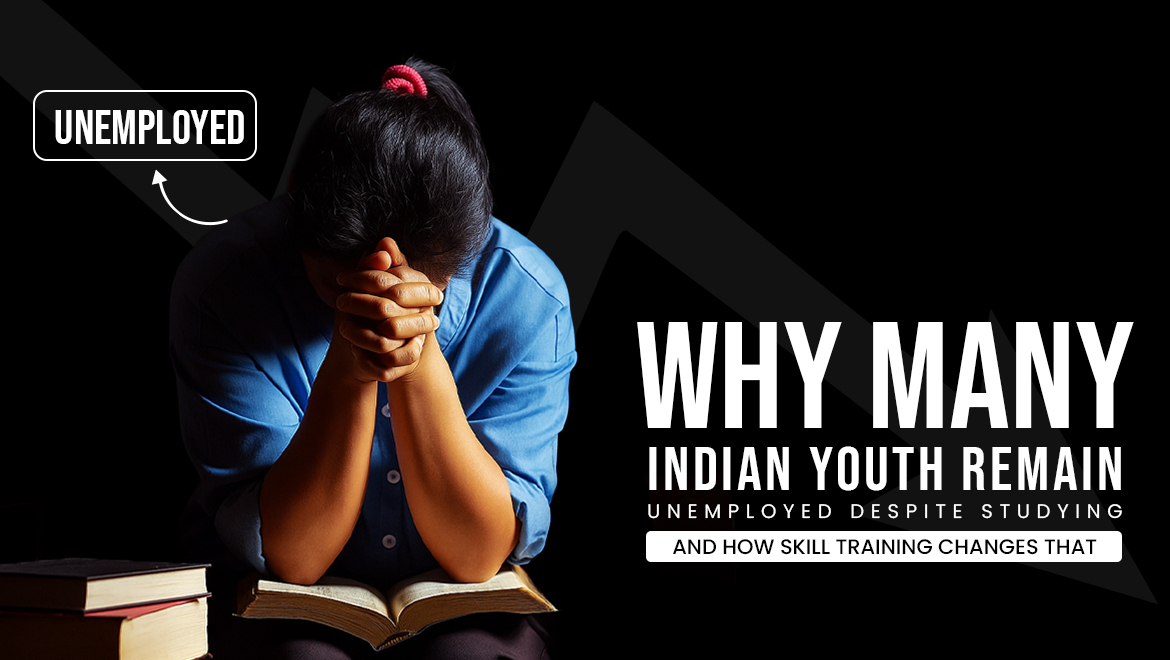
Why Many Indian Youth Remain Unemployed Despite Studying – And How Skill Training Changes That
Walk into any college campus in India and you’ll find classrooms full of determined young people, notebooks open, dreams alive. Yet, step into the job market, and the scene changes — those same graduates often find themselves waiting, sometimes for months or years, for the right opportunity.
In West Bengal and across India, this gap between education and employment isn’t just a statistic. It’s a lived reality for millions of young people. But why does this happen in a country producing so many degree holders each year? And more importantly — how do we break this cycle?
Let’s unpack the problem and explore the solution.
The Education-Employment Mismatch
India’s youth unemployment issue isn’t simply about a lack of jobs. It’s about the skills needed for the jobs that exist.
Here’s the truth most people won’t say out loud:
- Degrees ≠ Employability – Many graduates know theory but struggle with applying it in real-world situations.
- Industry Needs Are Changing Fast – Power plants, refineries, shipyards, manufacturing units — they need people who can operate machines, follow safety protocols, and solve technical problems on the spot.
- Limited Practical Exposure – Traditional courses often lack hands-on training, leaving students underprepared for industry-level work.
As a result, companies hire fewer freshers and spend more on training — or they simply look for candidates who already have job-ready skills.
Why This Hits West Bengal Particularly Hard
West Bengal, with its mix of traditional industries and growing infrastructure projects, is full of potential. But employers here face a recurring challenge: finding workers who don’t just know the job but can do the job from day one.
- No exposure to industrial tools and equipment.
- Limited understanding of safety regulations and compliance.
- Weak communication and teamwork skills for high-pressure environments.
That’s why, despite having an educated youth population, unemployment rates remain stubbornly high.
Skill Training: The Missing Link
This is where vocational skill training changes the game. Unlike academic programs that focus mostly on theory, skill development programs prepare students for specific industries and specific job roles.
For example:
- Oil & Gas – Learning pipeline installation, rig maintenance, and safety checks.
- Construction – Operating heavy machinery, reading site drawings, and finishing work.
- Manufacturing & Capital Goods – Working with automated production lines, quality inspection.
These aren’t just “extra skills” — they are exactly what employers are hiring for right now.
How Skill Training Solves the Unemployment Puzzle
1. Hands-On Learning
Instead of just reading about welding or electrical systems, students practice them under supervision, using the same equipment they’ll find in the workplace.
2. Industry Alignment
Courses are designed with direct input from industry experts, ensuring graduates have the most up-to-date knowledge and methods.
3. Faster Entry to Jobs
Most vocational courses are shorter than a traditional degree, meaning students can start earning faster.
4. Job Placement Support
Institutes like Quivan don’t just train — they connect students with recruiters, bridging the gap between skill and employment.
5. Global Opportunities
Skilled trades are in demand not just in India but worldwide, giving trained youth the option to work abroad in shipyards, oil rigs, or industrial plants.
Real Stories, Real Change
Sabir Sk
Welder-3G & 4G (SMAW/FCAW)
"Quivan's training program exceeded my expectations. The instructors were knowledgeable, and the skills I gained are invaluable!"
Suvajit Das
Fitter
"I learned so much at Quivan, and the connections I made were invaluable. Great place to start a career!"
Shahnawaz Aalam
Assistant Electrician
"I appreciate the personalized attention I received at Quivan. The staff truly cares about students' success."
Frequently Asked Questions
Q1. I already have a degree. Do I still need skill training?
Yes. A degree proves you have academic knowledge, but skill training ensures you can apply that knowledge in practical situations — which is what employers value most.
Q2. How long are Quivan’s training programs?
Our programs vary from a few weeks to several months, depending on the trade and level of expertise required.
Q3. Will I get job placement after completing the course?
Yes. Quivan offers placement assistance, connecting you directly with industries looking for skilled professionals.
The Bottom Line
Education is valuable, but education without employable skills is incomplete. The Indian job market is no longer looking for just degrees; it’s looking for proficiency.
For the youth of West Bengal — and India as a whole — the path to employment lies in combining academic knowledge with industry-ready skills.
That’s exactly why Quivan offers hands-on, placement-focused training in high-demand sectors like Oil & Gas, Construction, Manufacturing, HVAC, Shipyards, and more. We prepare you not just to find a job, but to excel in it from day one.
Take the Next Step
If you’re a student, graduate, or job seeker tired of waiting for opportunities, now is the time to invest in skill development. The difference between being qualified and being employable could be just one training program away.
At Quivan, we don’t just teach skills — we build careers.
Visit quivan.co.in or call us to know more about course durations, schedules, and placement assistance.